

[Jakarta] Tungki Pratama Umar
The global crisis in organ donor availability remains one of the most formidable challenges in modern medicine. Countless patients spend years on waiting lists, and unfortunately, many lose their lives before a compatible donor is found. Relying solely on human organ donors presents two major bottlenecks: a severe shortage in supply and deep ethical dilemmas.
But what if the solution is not waiting for a donor, but rather growing and "printing" the patient's own functional tissues?
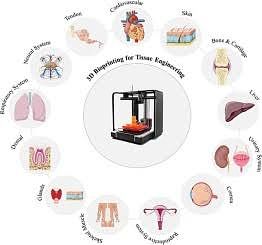
Driven by continuous breakthroughs in 3D Bioprinting and Tissue Engineering, the paradigm of translational medicine is actively shifting from a laboratory concept into a tangible clinical reality.
Not Plastic, But Living Cells
Unlike conventional 3D printing that relies on synthetic plastic filaments or metals, a 3D bioprinter utilizes specialized bio-inks. These bio-inks consist of living cells embedded within supportive protein matrices. The resulting output is not an inert object, but a living, biocompatible tissue architecture tailored to match the patient’s body, effectively eliminating the risk of immunological rejection.
From Structural Scaffolds to Functional Organs
While the foundational concepts of tissue engineering have been evolving since the 1990s, practical applications are now steadily breaking into clinical environments. Early milestones focused on structural reconstruction—such as printing customized scaffolds for cranial defects post-neurosurgery or engineering cartilage replacements.
Today, global research is moving toward far more complex horizons: fabricating intricate vascular networks (blood vessels) and developing high-fidelity organoids (mini-organs) used for complex disease modeling and high-throughput drug screening.
The 10–20 Year Clinical Horizon
Can we expect to print a fully functional heart or kidney for transplantation tomorrow morning? Not quite yet. Overcoming the challenges of complete vascularization and ensuring the long-term biological function of internal organs is vastly more complex than merely replicating their geometric structure. Researchers estimate that it will take another 10 to 20 years of intensive, targeted research before full organ replacements are mature and proven safe for direct clinical workflows.
"Build the Evidence, Not Just Using the Evidence" (Umar TP)
Establishing robust translational medical capabilities in regenerative medicine demands an unwavering commitment to proactive research. The philosophy is clear: we must actively position ourselves as producers of innovation and health solutions, rather than remaining passive consumers of existing medical technologies.
Interested?
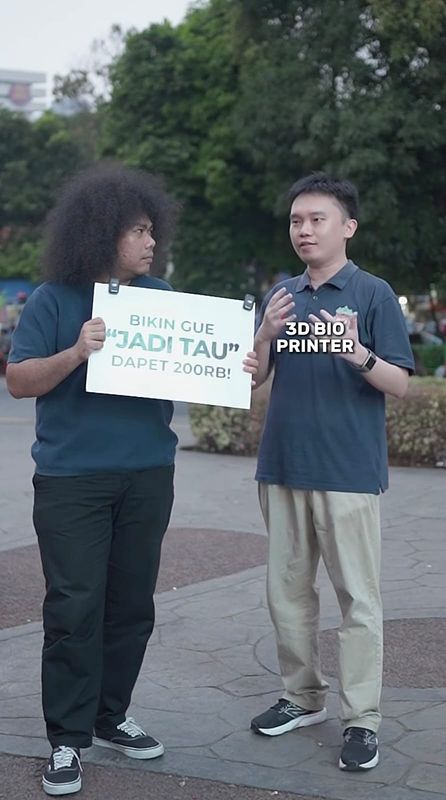
Check this link for full conversation:
https://www.instagram.com/reel/De_ukYXt0lv/?utm_source=ig_web_copy_link&rpxt=MzRlODBiNWFlZA==&srtk=MzRlODBiNWFlZA==